
SET STANDARD Training · General aviation · Communications
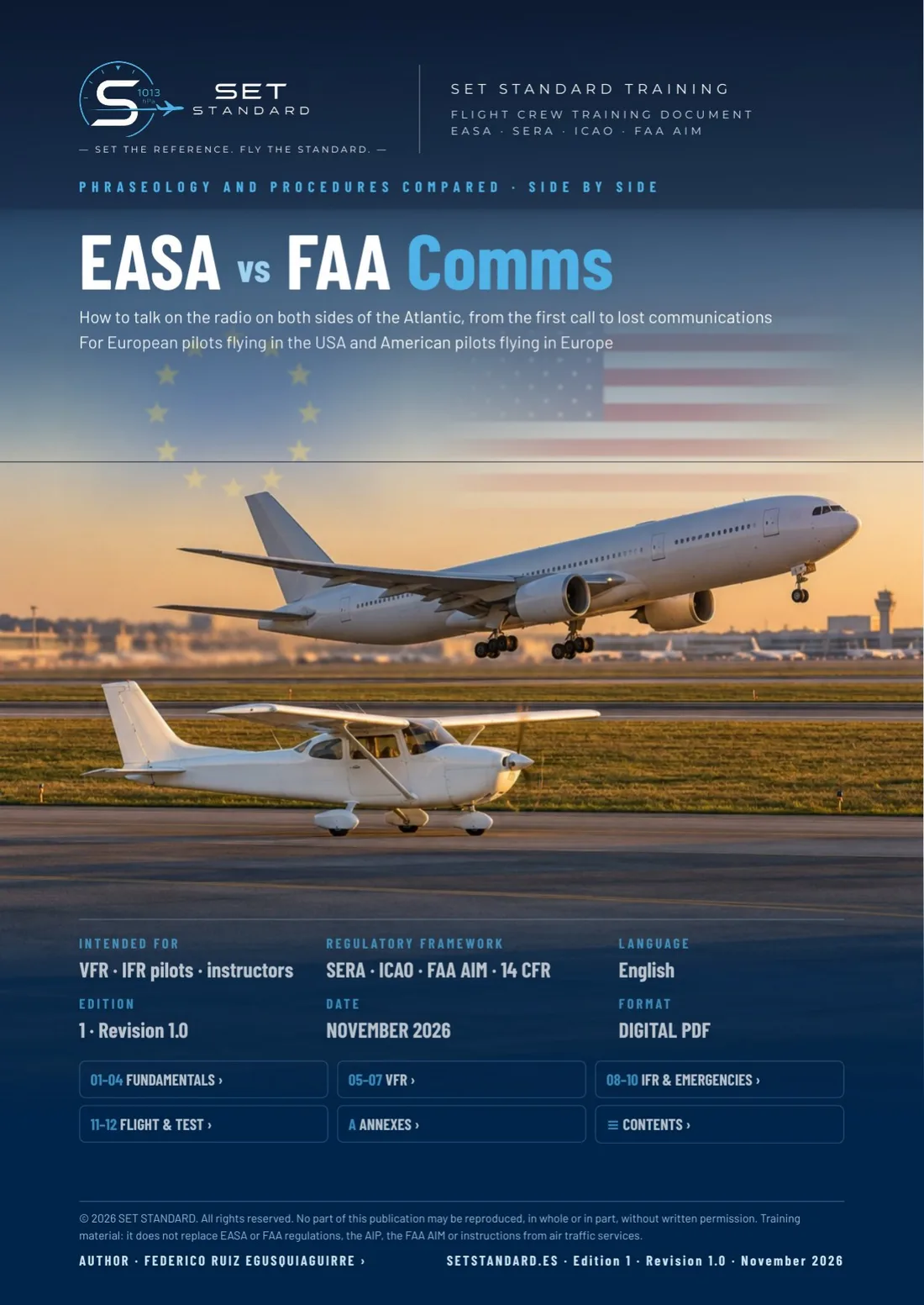
EASA vs FAA CommsPhraseology and procedures compared side by side · SERA · ICAO · FAA AIM
How to talk on the radio on both sides of the Atlantic: the same situation said the European way (SERA, ICAO) and the American way (FAA AIM), VFR and IFR, from the first call to lost communications.
€29.90VAT included
Every copy is delivered as a PDF personalised with the buyer's name and a licence number.
Printed copies on request: ask for a printed, bound copy.
- Edition
- Edition 1 · November 2026
- Pages
- 96
- Language
- English
- Format
- Intended for
- VFR and IFR pilots, instructors and examiners
What it covers
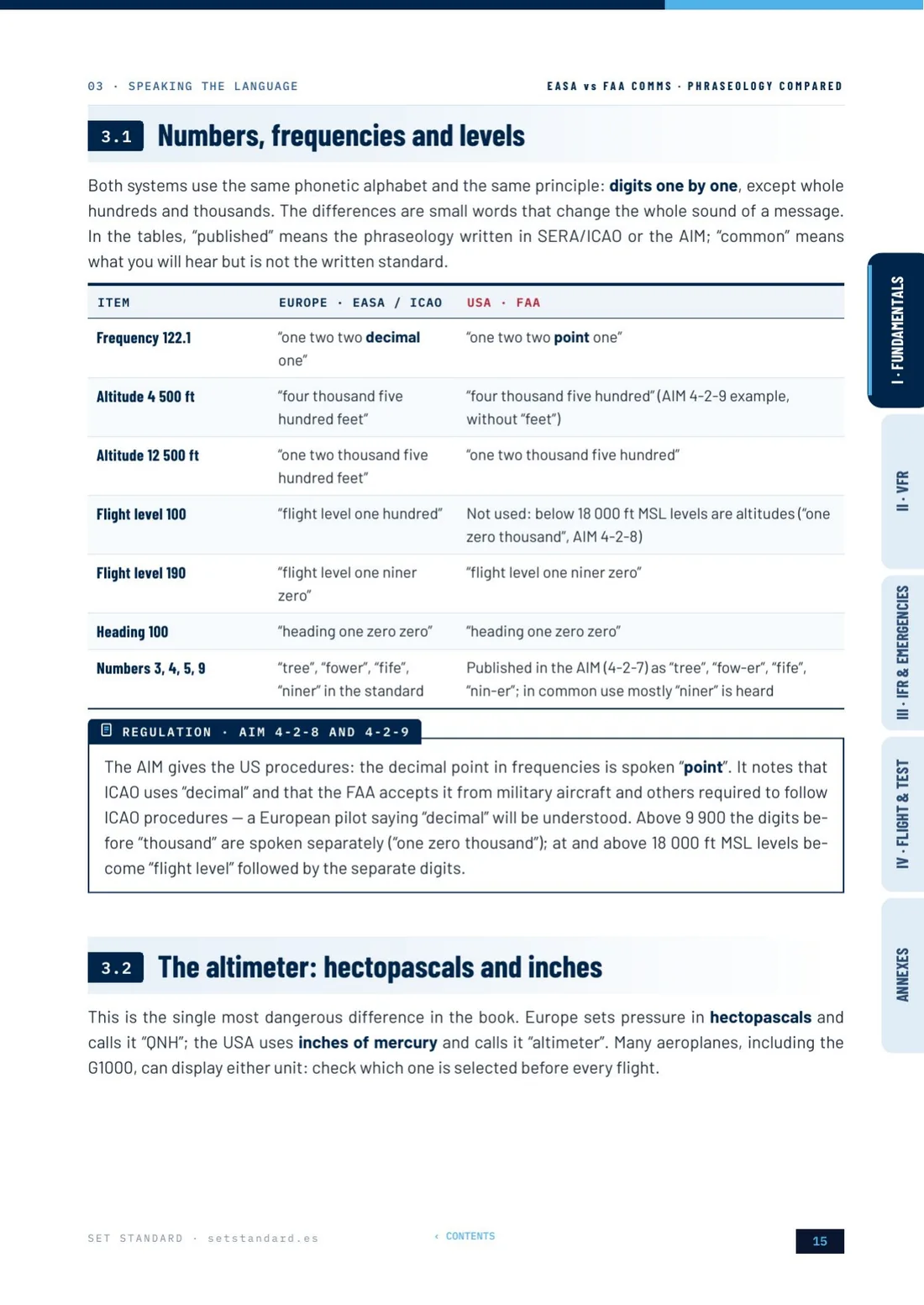
Written for European pilots who are going to fly, train or convert their licence in the USA, for American pilots flying in Europe, and for the instructors and examiners who prepare them. Every chapter compares SERA and ICAO with the FAA AIM, the controllers’ order JO 7110.65 and 14 CFR.
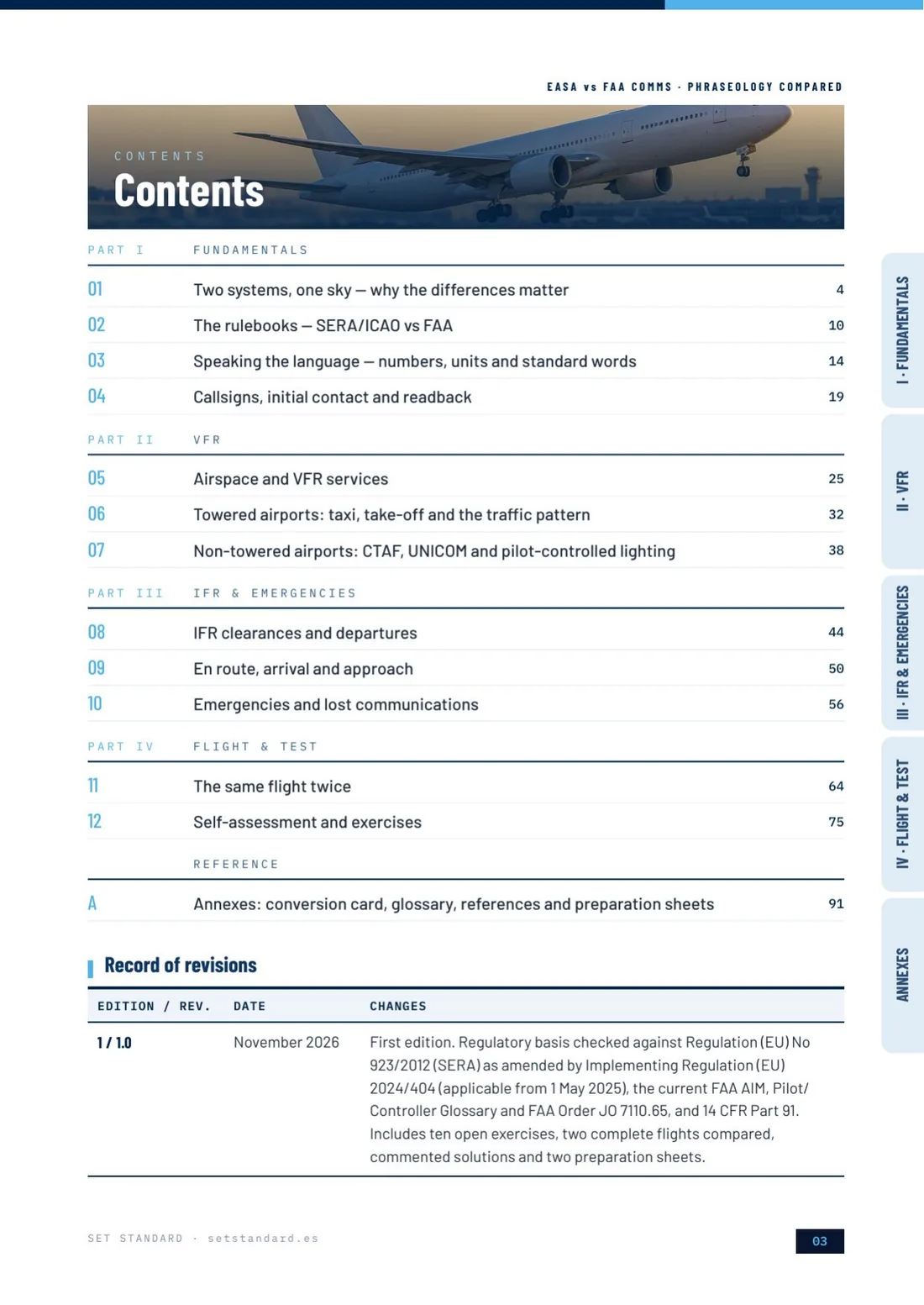
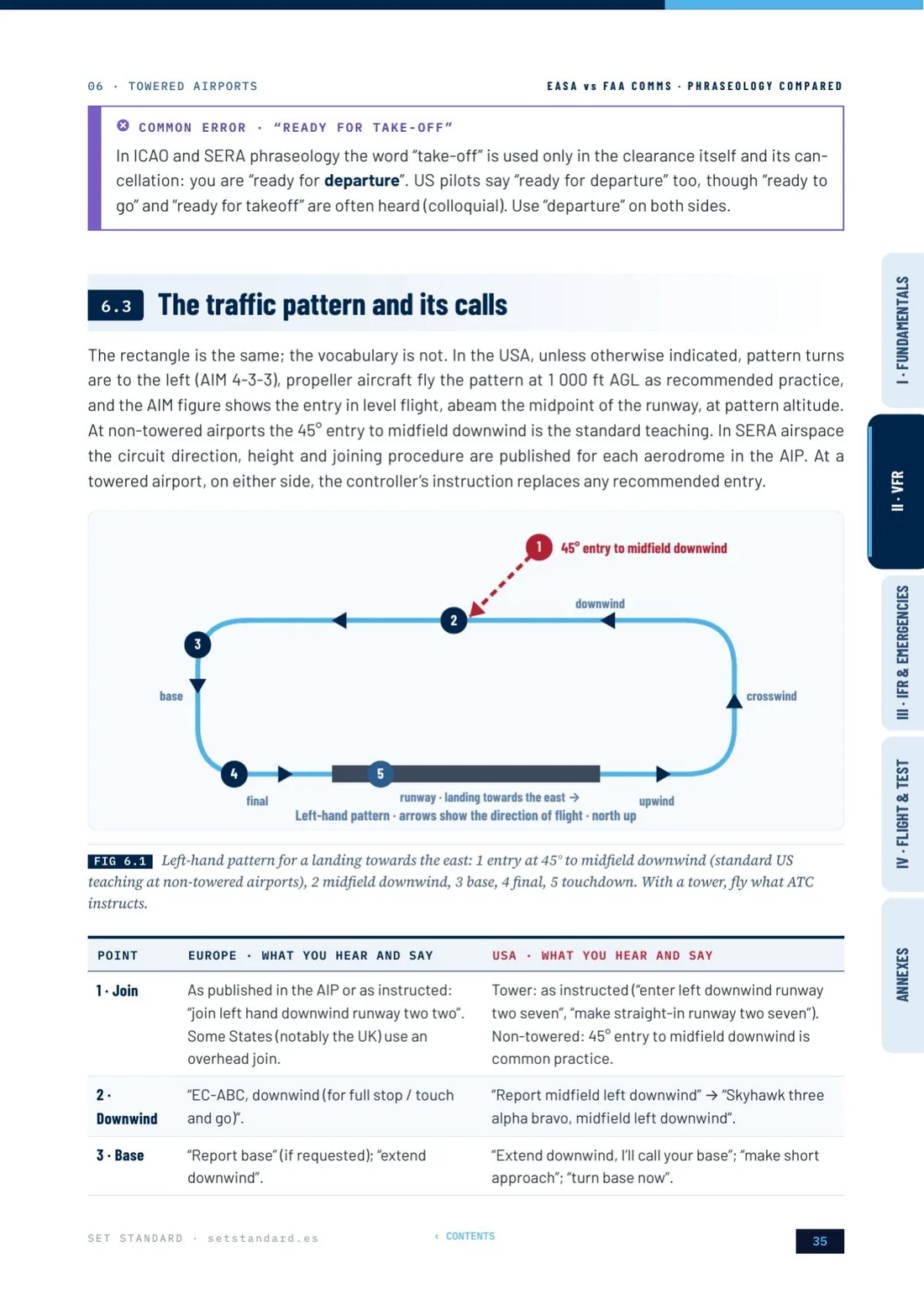
Fundamentals (why the differences matter, the two rulebooks, numbers, units and standard words, call signs, initial contact and readback); VFR (airspace and VFR services, towered airports and the traffic pattern, non-towered airports with CTAF and UNICOM); IFR and emergencies (clearances and departures, en route, arrival and approach, emergencies and lost communications); the same flight flown twice, and a self-assessment. Annexes with a quick conversion card and checklists for crossing the Atlantic in each direction.
Start with the basics: VFR Comms · Radiotelephony Manual
Next step: IFR Comms · IFR Radiotelephony Manual
Format
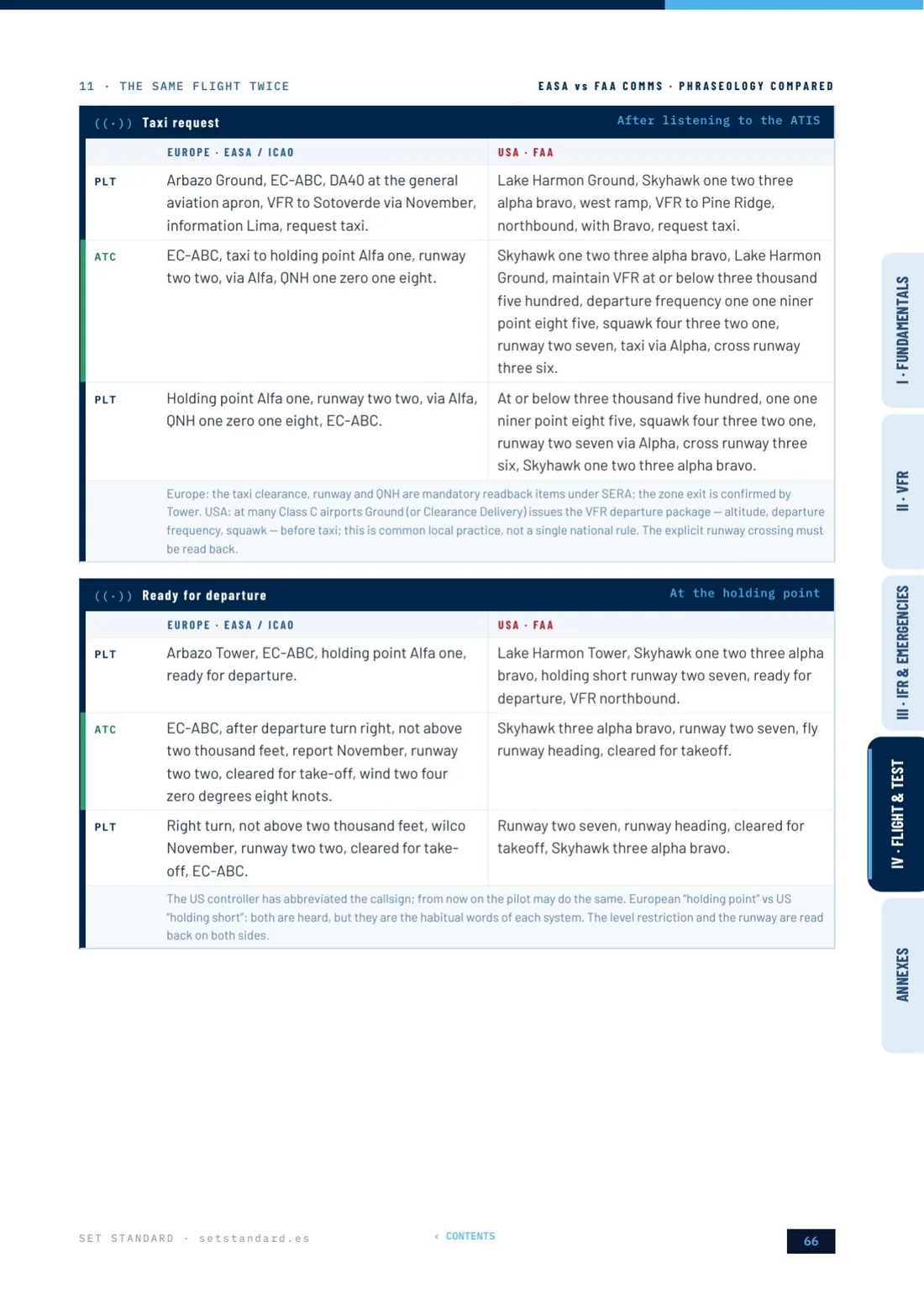
Digital edition with SET STANDARD editorial layout: tab and bookmark navigation, internal links, dialogues in two columns (Europe | USA) and notes explaining each difference. Designed to be read on a tablet or a computer.
Free sample · 5 pages
Training and reference material. Aircraft, airports and procedures in the examples are fictional. Not affiliated with, endorsed or approved by EASA, AESA or the FAA; it does not replace the regulations in force, the AIP, the FAA AIM or air traffic services instructions.