
SET STANDARD Training · General aviation · Communications
IFR Communications ManualIFR radiotelephony manual · standard phraseology · English edition
Standard phraseology for instrument flight, call by call: from the ATC clearance to the approach, holding and communication failure, with a complete example IFR flight.
Expanded edition: transmission technique, clearance elements, level and speed formats, traffic information and alerts, similar call signs and 42 questions.
€29.90VAT included
Every copy is delivered as a PDF personalised with the buyer's name and a licence number.
Printed copies on request: ask for a printed, bound copy.
- Edition
- Edition 1 · Revision 1.0
- Pages
- 79
- Language
- English
- Format
- Intended for
- IR, BIR and CB-IR students, IFR pilots and instructors
What it covers
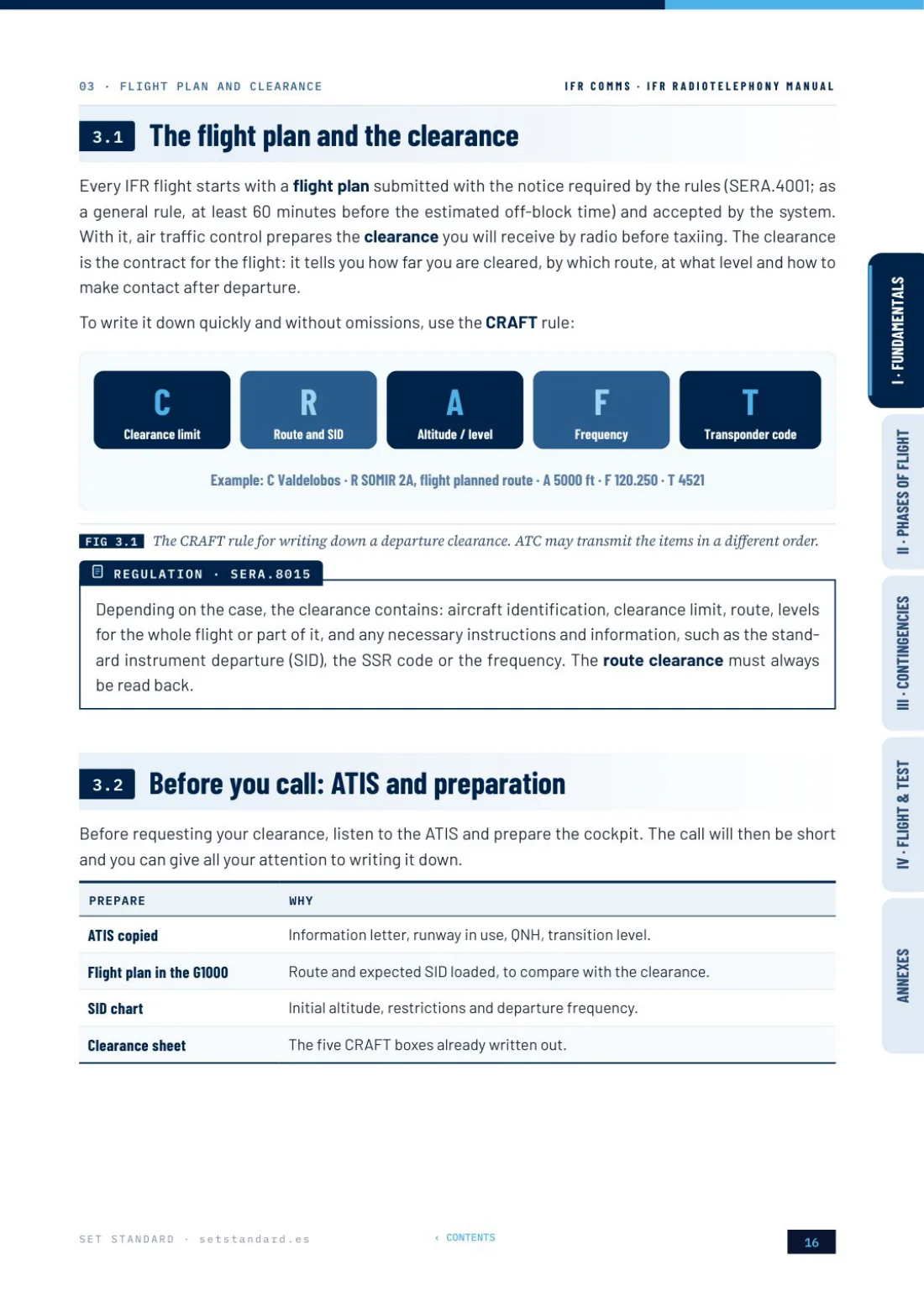
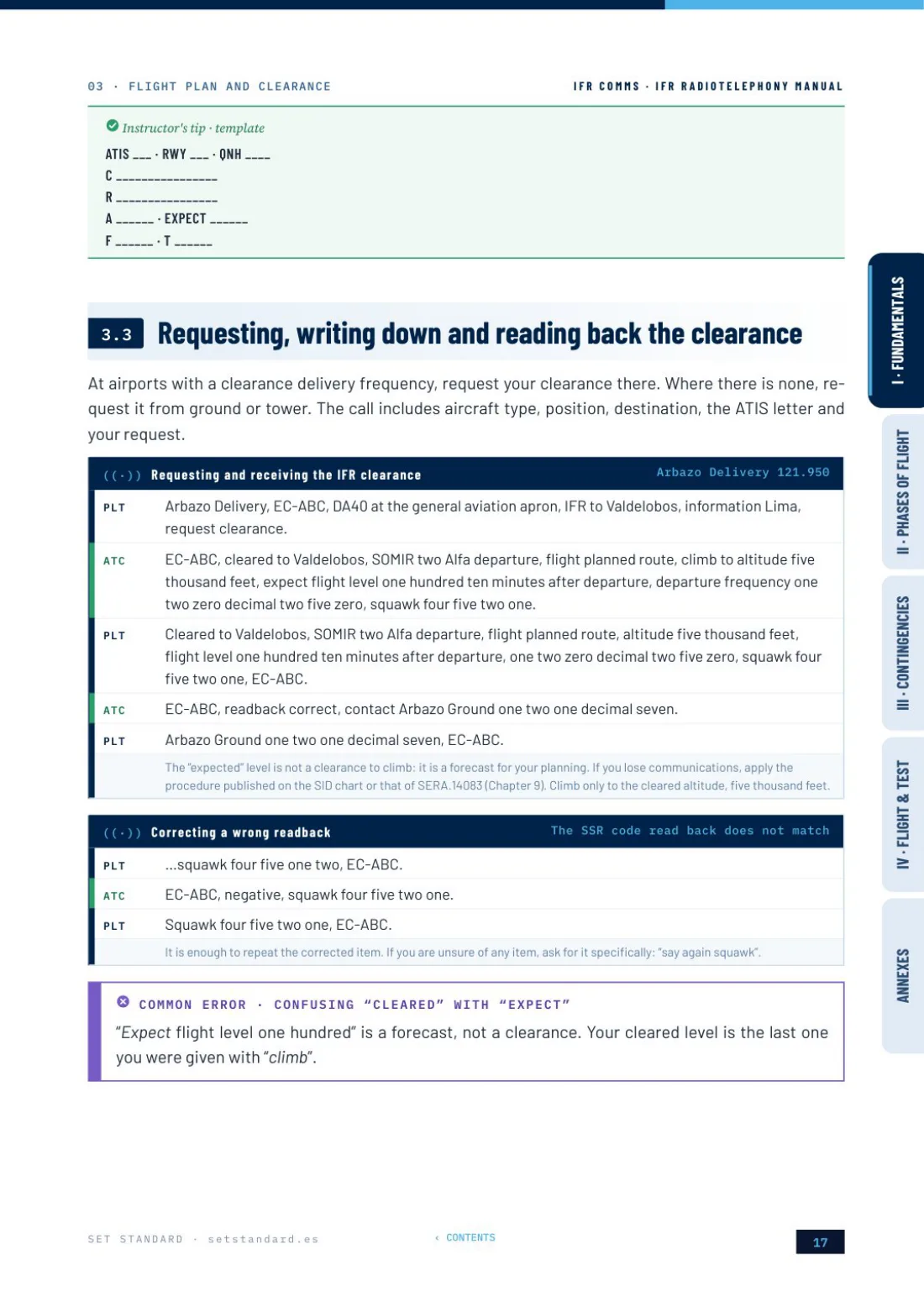
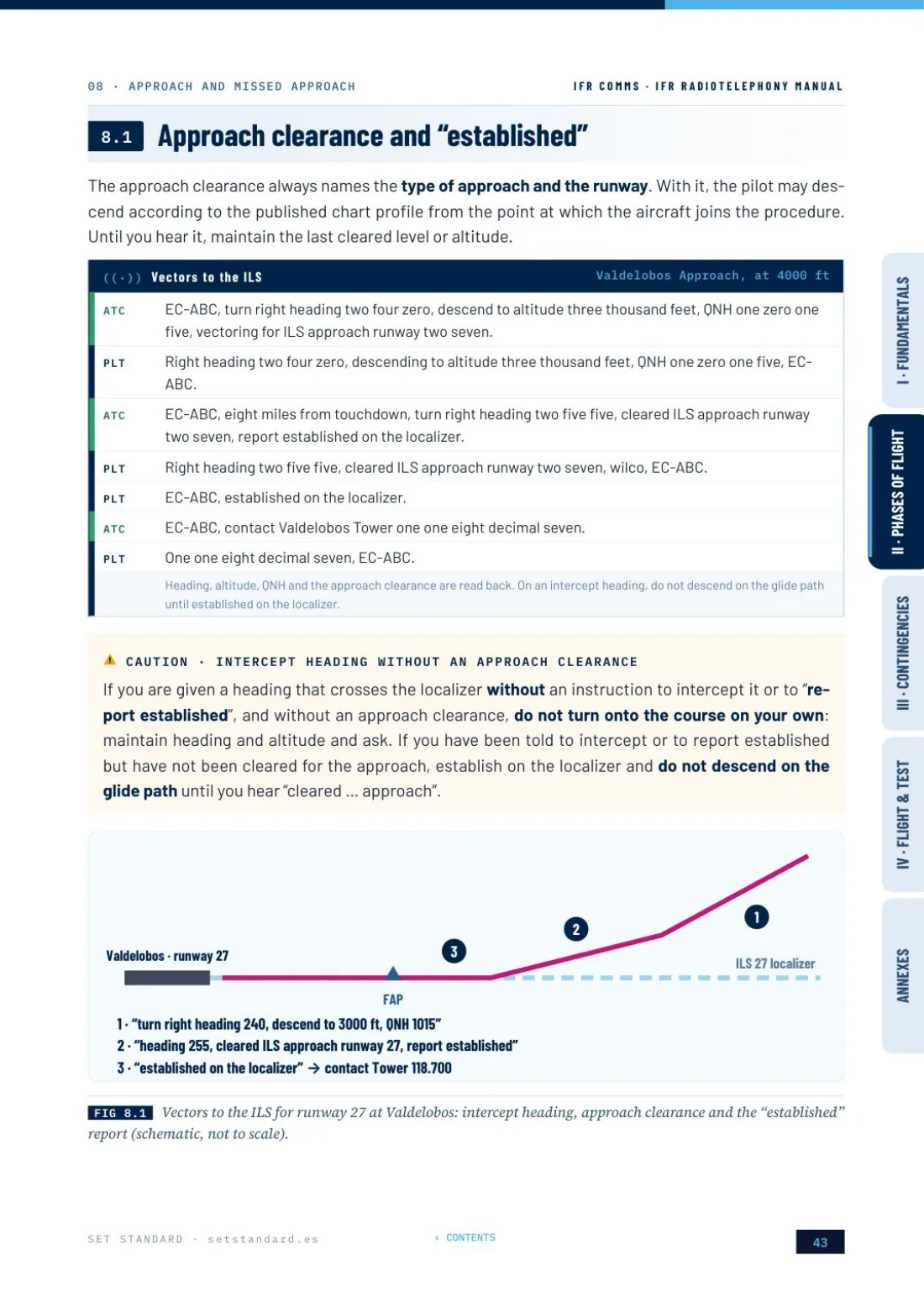
More than half of the manual is flight dialogue, laid out speaker by speaker, with notes explaining why it is said that way and what must be read back. It follows on from VFR Comms: basic radio technique is taken as known and the focus is on what is specific to IFR.
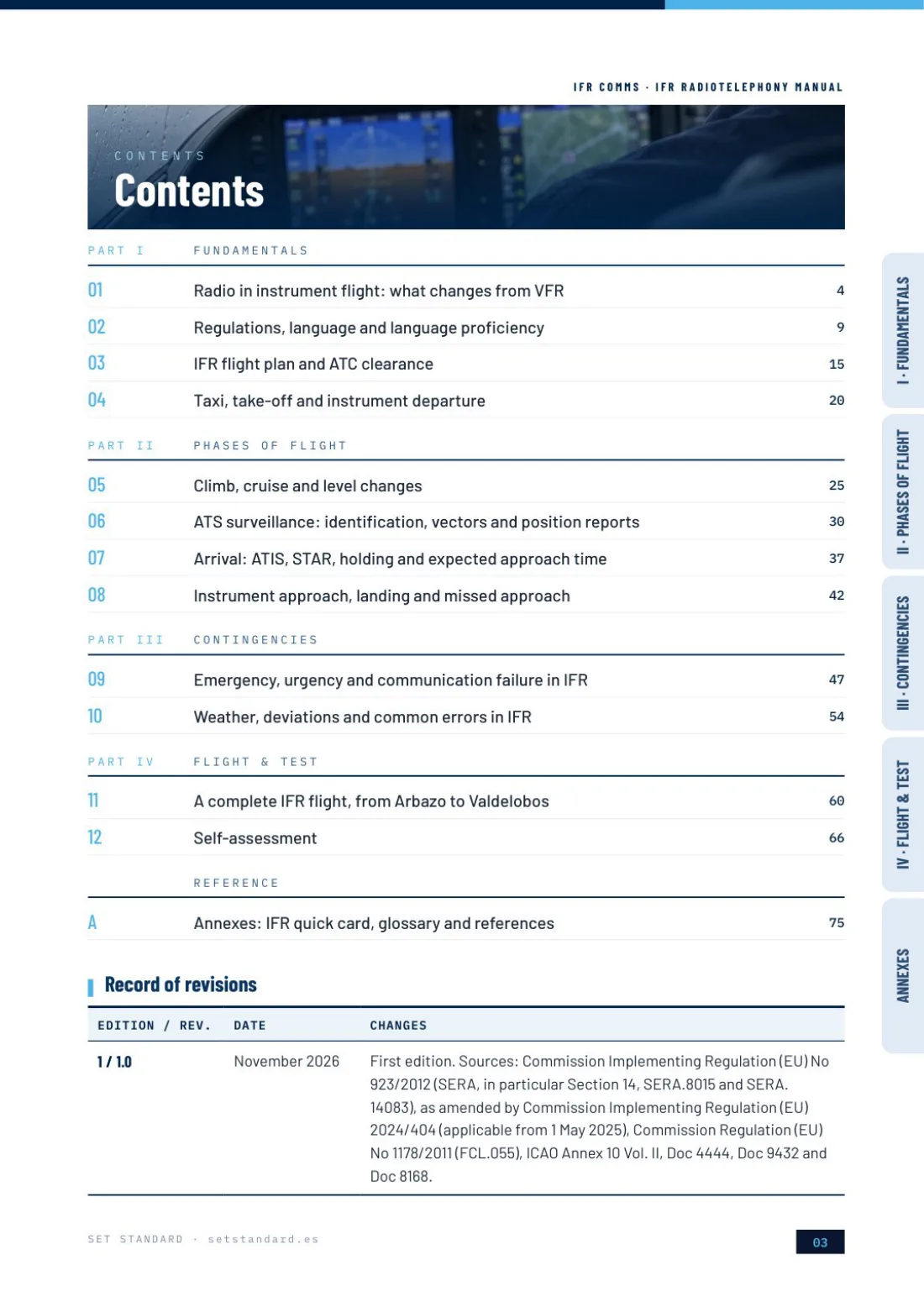
Fundamentals (radio in instrument flight, regulations, language and language proficiency, the IFR flight plan and ATC clearance); phases of flight (taxi, take-off and instrument departure, climb, cruise and level changes, ATS surveillance, arrival with ATIS, STAR and holding, approach, landing and missed approach); contingencies (emergency, urgency and communication failure, weather, deviations and common errors); a complete IFR flight from start to finish and a self-assessment. Annexes with a quick reference card, glossary and references.
Start with the basics: VFR Comms · Radiotelephony Manual
Format
Digital edition with SET STANDARD editorial layout: tab and bookmark navigation, internal links, dialogues laid out speaker by speaker and notes explaining what must be read back. Designed to be read on a tablet or a computer.
Free sample · 5 pages

Training and reference material. Call signs, aerodromes and procedures in the examples are fictional. Not approved by EASA or any national aviation authority; it does not replace the regulations in force, the AIP or air traffic services instructions.